Beyoncé and anatomy as jewelry
Beyoncé’s silver Olivier Rousteing look was one of the night’s clearest gestures: an almost sculpted body, read through anatomy and armor-like shine. Its power was in precision. Instead of simply wearing the theme, the look turned structure, bone and surface into ornament.

Rihanna and architecture as dress
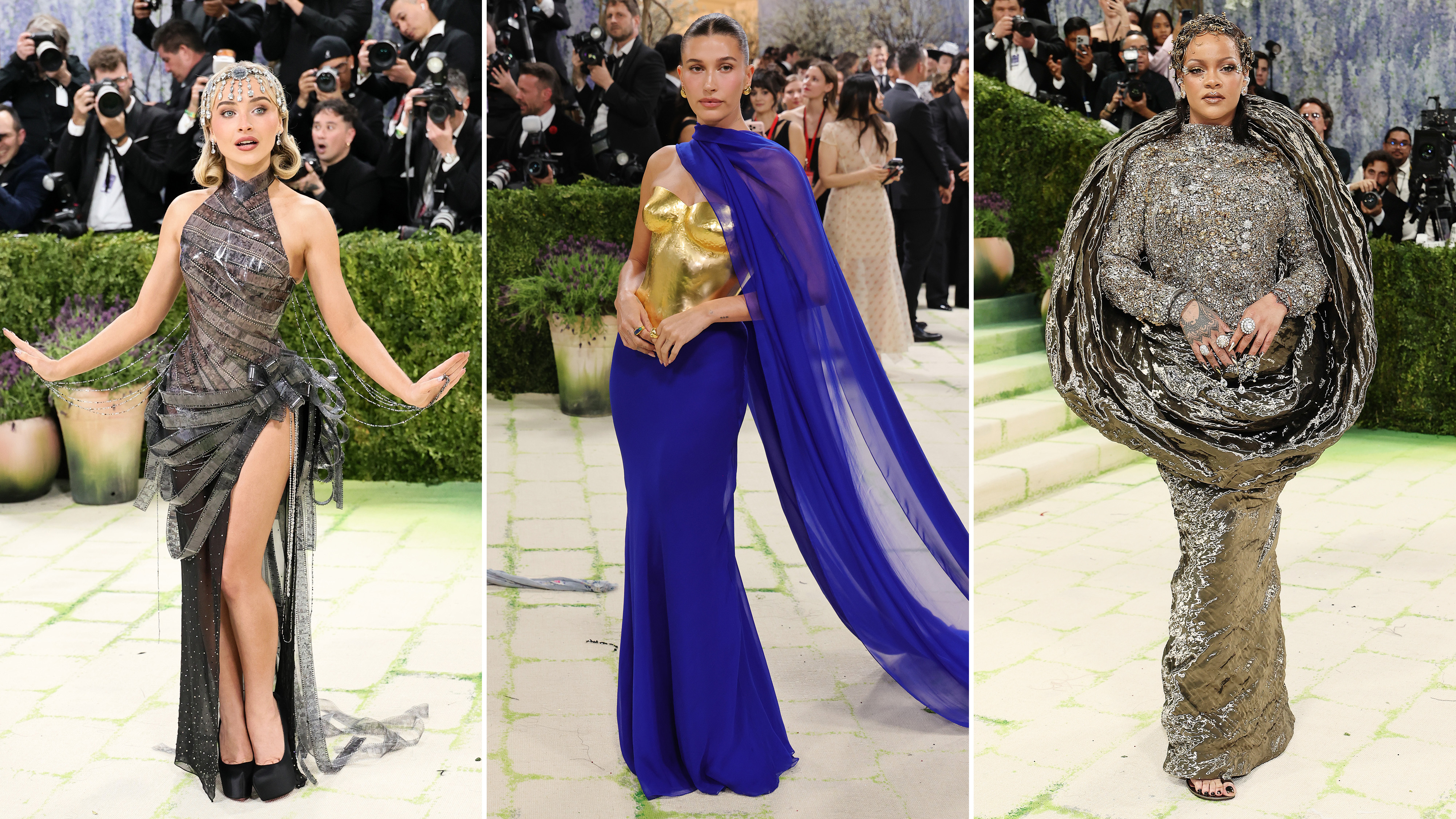
Rihanna arrived in Maison Margiela with a sculptural construction that nodded to medieval architecture. The result stood out for volume, presence and controlled theater. It was a look made to be seen in 360 degrees, with silhouette working like a monument.

Hailey Bieber and the molded body
Hailey Bieber, in Saint Laurent, focused the eye on a rigid golden bodice. The interest was in the idea of precious metal against skin: less literal costume, more gallery object. The restraint around it made the central piece even stronger.

Sabrina Carpenter and image as cinema
Sabrina Carpenter moved the reference into narrative, wearing a Dior dress covered with film-strip details tied to Audrey Hepburn’s “Sabrina”. It worked because it linked archive, character and pop culture while keeping a couture finish.

Hunter Schafer and the painting in motion
Hunter Schafer wore Prada inspired by Gustav Klimt, bringing painting, texture and portraiture to the carpet. The look stood out because it translated art without becoming a school-project costume: the reference lived in the mood, composition and controlled shine.

Colman Domingo and Bad Bunny in color and attitude
Among the men, Colman Domingo and Bad Bunny kept the carpet alive. Domingo wore Valentino with a colorful harlequin pattern, creating graphic movement. Bad Bunny aged his own image with prosthetics, gray hair and a cane, proving that presence is also styling.


What remains from the night
The 2026 Met Gala worked best when looks did not simply try to “look like art”, but thought like art: proposing form, matter, point of view and a relationship with the body. The standouts balanced concept and desire, spectacle and actual clothes.